

A silent piano works by using a mechanical stop rail to prevent the hammers from striking the strings, while optical sensors beneath each key detect movement, speed, and depth of every keystroke. Those signals route to a digital sound module loaded with high-resolution samples of a concert grand piano, which the player hears through headphones. The result: a real acoustic piano you play with full touch sensitivity, but in complete silence.
Engaging silent mode activates a mute rail inside the piano. This rail catches the hammers a fraction of an inch before they reach the strings. The keys, action, and pedals continue to behave exactly the same way as on a standard acoustic piano — the hammer simply never completes its strike. Disengage silent mode and the rail retracts, returning the instrument to fully acoustic mode with no compromise to its tone or feel.
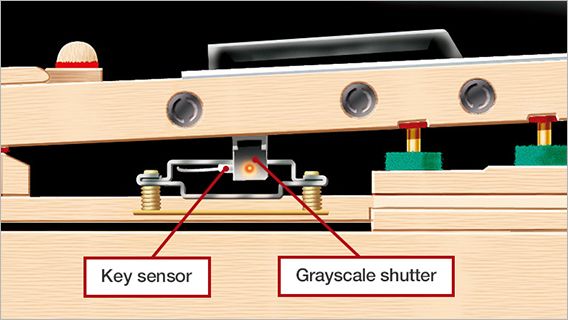
While the hammers are blocked, non-contact optical sensors read every nuance of key movement. Because these sensors never touch the keys, they preserve the authentic action of the piano. The data feeds an electronic sound module containing binaural samples recorded from a Yamaha CFX concert grand. Players hear that rich sound through headphones with full dynamic response — soft passages stay soft, loud passages bloom.
Most modern silent piano systems include MIDI connectivity, multiple instrument voices, recording capability, and metronome functions. The Yamaha silent piano lineup ranges from the entry-level b1 through the flagship grand models, all using the same SH3 technology platform.
Two paths exist for adding silent capability. Factory-installed systems come pre-fitted by the manufacturer on a new piano, integrated during assembly for the cleanest result. The Yamaha b3 SC3 silent upright is a strong example of this approach.
Aftermarket silent systems install into an existing piano in roughly one day. The technician removes the keys, fits a sensor rail to the keybed, and adds the mute mechanism. The process is reversible and does not permanently alter the acoustic performance of the instrument.
Yamaha also builds TransAcoustic pianos, which take the concept further. Instead of routing digital sound only to headphones, TransAcoustic models use transducers attached to the soundboard to vibrate the wood itself, producing digital tones through the actual body of the piano at adjustable volume. The Yamaha GC1 TA3 TransAcoustic grand demonstrates this hybrid approach.
Yes. A Yamaha silent piano preserves real piano action because the keys, hammers, and pedals move exactly as they do on a traditional upright or grand. The middle pedal often serves as the silent-mode toggle, and the touch sensors capture every nuance without altering the feel. A piano student practicing on such instruments builds the same technique they would on any acoustic piano.
Almost any acoustic piano in good condition accepts an aftermarket silent system. Many systems install in about a day, and the work is reversible. This route lets you keep your own piano while gaining the ability to play silently through headphones whenever you want.
Factory-installed silent systems add roughly $2,000 to the equivalent acoustic model. The Yamaha b3 SC3 runs around $13,099. Aftermarket installation on an existing instrument is another option pursued by piano owners across the piano industry, including Steinway dealers offering systems like PianoDisc QuietTime.
The strings produce no sound of the piano in digital mode because the hammers never reach them. The person playing hears a faint clicking sound from the action mechanism, but anyone else in the room hears only the soft tap of keys against the keyboard. Headphones deliver the sampled sounds at any volume.
No. Silent systems work without affecting the acoustic mechanism. Mechanical sensors and optical touch sensors sit beneath the keys sending signals to the sound module, while the mute rail engages only when activated. Advanced systems used by professional musicians offer full MIDI capability for connecting to recording software, sheet music apps, and other digital tools, all while leaving the real piano untouched during normal play.
Want to hear the difference between a Yamaha Silent and a TransAcoustic for yourself? Call us at (609) 403-6045, book a private sales appointment, or stop by the Lawrenceville showroom. We’ll set you up at the bench with headphones so the pianos can speak for themselves.