
Beginners should buy a piano with 88 fully weighted keys that closely mimics the touch of a traditional piano. While a digital piano offers convenience and lower costs, a high-quality upright piano provides the most realistic piano tone and authentic key action necessary for developing proper technique. For most students, the choice depends on the balance between budget, available space, and the desire for musical expression.

When you learn piano, the physical response of the instrument dictates how you develop finger strength. A good digital piano features weighted keys that provide resistance, similar to the hammers in an acoustic piano. Cheaper keyboards or semi-weighted keys do not offer this resistance, which hinders a student’s ability to play with nuance.
Piano students who practice on touch-sensitive keys learn to control volume and piano tone through their physical approach. If a keyboard lacks this, the student will struggle when transitioning to a grand piano during piano lessons. Look for models with scaled hammer action to ensure the lower notes feel heavier than the higher ones, just like a real piano.
Parents often prioritize affordable digital pianos due to their versatility. A beginner digital piano like the Yamaha P series provides several practical advantages for a household:
The Yamaha P-125 or the Roland FP-10 are popular choices that offer excellent piano sound and MIDI compatibility for music production. These instruments provide a decent sound and sustain pedal support within a portable frame.

While many digital pianos are impressive, they are simulations. A traditional piano produces sound through physical strings and a wooden soundboard, creating a depth of keyboard sound that electronics cannot perfectly replicate.
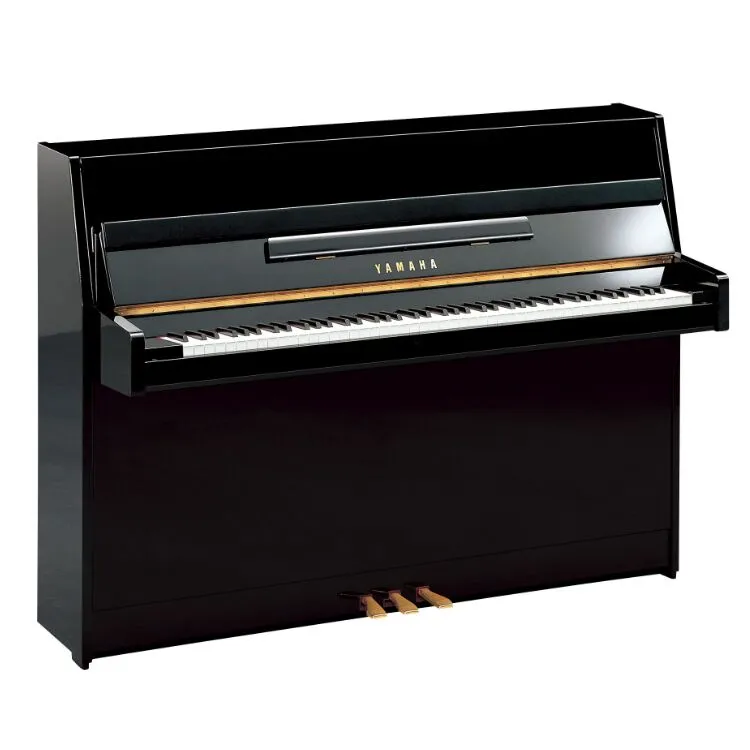
For students committed to classical piano, a studio upright is the industry standard. The Yamaha P22D 45-inch studio upright is designed specifically for heavy use in schools and homes, offering a robust piano sound and a precise action that lasts for decades.
If space is a concern, the B1 Yamaha 43-inch upright piano provides a compact profile without sacrificing the grand piano sound quality Yamaha is known for. These acoustic pianos hold their value significantly better than electric pianos, making them a long-term investment in a child’s musical education.
When comparing different instrument sounds and technical specs, focus on these three areas:
Polyphony refers to how many notes the piano offers at once before the oldest ones cut off. High-quality digital keyboards offer 128-note polyphony or higher. This ensures that even with the sustain pedal held down during complex pieces, the piano playing remains fluid.
A MIDI controller setup allows students to send MIDI data to a computer. This is useful for those interested in music production or using educational software. Most modern Yamaha upright pianos also come in “Silent” versions, which combine the physical action of an acoustic with the digital output of a headphone jack.
In a digital piano, the built-in speakers determine how much the sound fills the room. If the piano’s speakers are small, the instrument sounds will lack bass. For a more immersive experience, look for a digital keyboard with at least 12 watts of power per speaker.
Parents should weigh the longevity of the instrument against the initial investment. A Yamaha B Series upright serves a student from their first lesson through university-level repertoire. While beginner keyboards are tempting for their low price, they often need replacement within two years as the student outgrows the limited key action.
If you prefer a digital keyboard for its backing track or sound effects capabilities, ensure it still prioritizes the piano journey by offering fully weighted keys. Features like duo mode, which splits the keyboard into two identical sections for teacher and student, are also highly beneficial.
A high-quality digital piano is excellent for learning to play piano. The best piano for a student is a dedicated piano for beginners with fully weighted keys, where the key action closely mimics an acoustic piano’s keyboard. Look for models with smart-scaled hammer action, which provides heavier resistance on the lower notes. While most digital pianos offer convenience, beginner-friendly digital pianos specifically ensure students develop proper finger strength right from the start.
A cheap electronic keyboard is not a true piano keyboard. Most keyboards from non-specialty stores lack weighted keys and good sound quality. Keyboards tend to build poor habits because they offer zero physical resistance. A good beginner keyboard must have 88 weighted keys. When comparing an unweighted toy to other keyboards built for education, the difference in technique development is massive.
Both are viable options for beginner pianos. High-quality used Yamaha pianos offer excellent value and hold their tuning stability better than many new, inferior musical instruments. You will find premium used acoustic models for about the same price as new, entry-level digital pianos. Always purchase from a reputable dealer to ensure the instrument is inspected, tuned, and covered by a warranty.
No. A student needs an instrument that allows them to read sheet music, play songs, and develop fundamental skills. An upright acoustic or a premium digital piano provides everything necessary for a student to enjoy playing and advance through their lessons.
Bring the future pianist with you on a Saturday, and we will set up a B1, P22, and a P-145 side by side so everyone can play and compare. Or browse our full Yamaha upright lineup online first and call ahead so we can pull specific models from the back room.