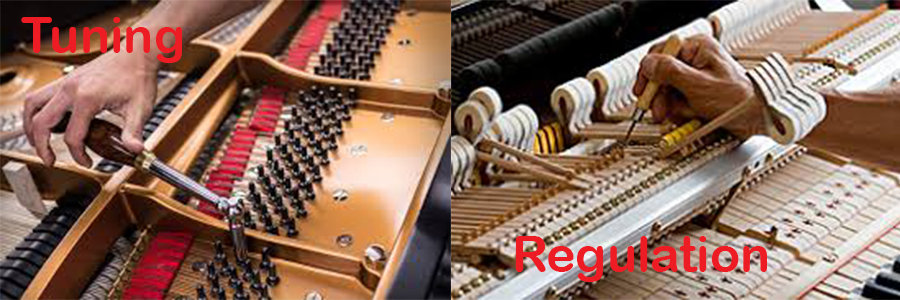
A standard piano tuning in NJ costs $150 to $300. The price depends on how long it’s been since the last tuning, the type of piano, and whether extra work is needed before the real tuning can start.
How long since the last tuning matters most. A piano tuned last year by a good tuner holds its pitch well and needs straightforward work. A piano left untouched for several years is a different task. The strings drift so far below A440 that the technician must perform a pitch raise — a pre-tuning step that gets the piano close enough to work with before fine-tuning begins. This adds $50 to $100 to the bill and puts more stress on the pins and soundboard. Neglect is more expensive than maintenance.
Grand pianos cost more to tune, $150 to $300, due to longer strings, greater string tension, and a more complex action. Upright piano tuning sits at $150 to $300.
A Registered Piano Technician (RPT) certified by the Piano Technicians Guild charges a bit more than an uncertified piano tuner. For a piano you’ve owned for decades and want to protect, that’s the right call. Affordable does not always mean good value.
Some piano tuners also charge a travel fee beyond their standard service radius to your house. Confirm this upfront.
Yamaha recommends tuning at least once a year. Ideally, twice, once in spring and once in autumn, to match the seasonal humidity shifts that affect pitch. The wooden components swell in summer and contract in winter, the soundboard moves, and the strings follow.
New pianos need more frequent tuning. In the first year after purchase, tune twice at a minimum. New strings stretch considerably and need repeated adjustment before they hold their shape and stay in tune consistently.
Pianos used for live performance, teaching or recording need tuning every three to six months. The higher the frequency of playing, the higher the frequency of tuning required.
A piano tuner arrives at your house, opens the instrument, and works through all the strings. Most notes have three. The first string of each note is set to correct pitch, then the rest are matched to it. Each tuning pin is carefully tightened or released with a tuning hammer. The tuner listens through the full range of the keyboard, making fine adjustments until every note sits in tune across the instrument. For a piano in good shape, that is a clean 60-minute task.
Tuning corrects pitch. Repairs address mechanical problems such as sticky keys, worn hammers or damaged pins. A good tuner will discuss any issues spotted during the session, but repairs are quoted separately. Ask upfront what is included.
A standard tuning runs $150 to $300 in the New Jersey area. Nationally, the range is $100 to $300, varying depending on location and technician experience.
Twice a year for most home pianos. New pianos need two tunings in their first year as strings settle. Pianos in regular performance or teaching use need tuning every three to six months.
If a piano has dropped well below A440, the technician raises the pitch before fine-tuning begins. This pre-tuning step adds $100 to $200 to the standard fee.
No. The tuning fee is the same for uprights and grands. Both use the same process and take roughly the same amount of time. The price depends on the piano’s condition, not its size or shape.
Ready to get your piano tuned or want a technician recommendation? Call us or stop in — we’re open seven days a week in Lawrenceville.