Comparison Chart
Roland HP702 vs HP704 Comparison Chart
Two compact Roland home pianos with SuperNATURAL Piano Modeling. The HP704 steps up the keyboard and the speakers.


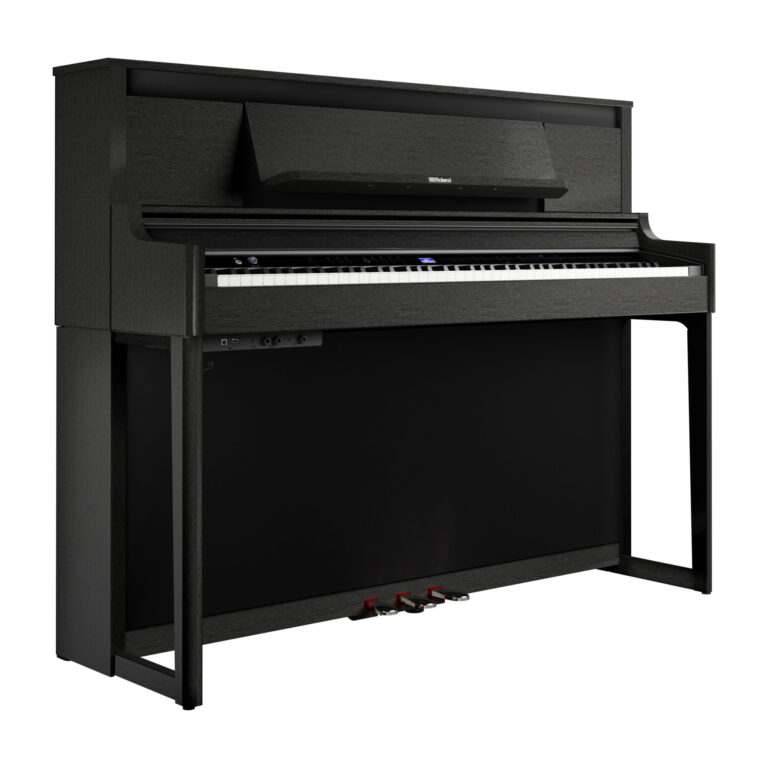
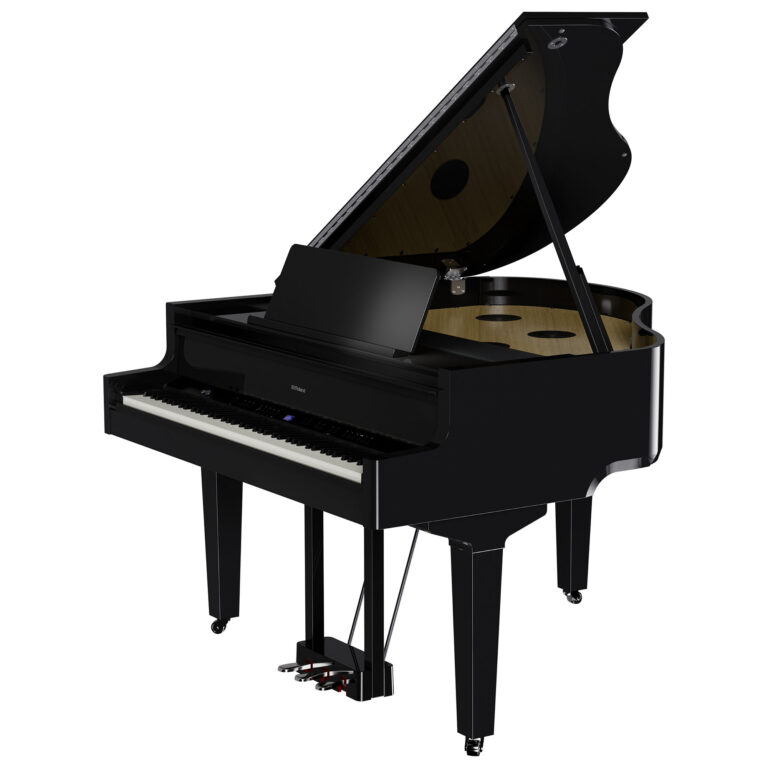
The HP702 and HP704 are Roland’s HP700 series home digital pianos, one step below the LX series. Both use Roland’s SuperNATURAL Piano Modeling sound with no limit on piano notes; the HP704 adds a better keyboard and a stronger speaker system.
The Differences in Brief
- HP702: the PHA-4 Standard keyboard and two 4-3/4″ speakers (14 W × 2).
- HP704: the PHA-50 keyboard with escapement, a cabinet and near-field speaker system (25 W × 2 + 5 W × 2) and Acoustic Projection.
Roland HP702 vs HP704 Specifications
| Specification |  Roland HP702 |
 |
|---|---|---|
| Keyboard | ||
| Action | PHA-4 Standard Keyboard: 88 keys, escapement, Ivory Feel | PHA-50 Keyboard: 88 keys, wood and plastic hybrid structure, escapement, Ebony/Ivory Feel |
| Touch sensitivity | Key Touch: 100 types; Hammer Response: off or 10 types | Key Touch: 100 types; Hammer Response: off or 10 types |
| Sound | ||
| Sound engine | SuperNATURAL Piano Modeling, 324 tones | SuperNATURAL Piano Modeling, 324 tones |
| Max. polyphony | Piano tones: unlimited; other tones: 384 | Piano tones: unlimited; other tones: 384 |
| Ambience | Ambience effect | Ambience effect |
| Headphones | Headphones 3D Ambience | Headphones 3D Ambience |
| Speakers | ||
| Sound system | — | Acoustic Projection |
| Speakers | 4-3/4″ (12 cm) × 2 | Cabinet + near-field: 5″ + 1″ (12 + 2.5 cm) × 2 (coaxial); spatial: 2″ (5 cm) × 2 |
| Amplifiers | 14 W × 2 | 25 W × 2, 5 W × 2 |
| Pedals | ||
| Pedals | Damper (Progressive Damper Action, continuous detection), soft (continuous detection, assignable), sostenuto (assignable) | Damper (Progressive Damper Action, continuous detection), soft (continuous detection, assignable), sostenuto (assignable) |
| Display | ||
| Display | Graphic OLED, 128 × 32 dots | Graphic OLED, 128 × 32 dots |
| Connections | ||
| Bluetooth | Audio: Bluetooth 3.0; MIDI: Bluetooth 4.0 | Audio: Bluetooth 3.0; MIDI: Bluetooth 4.0 |
| Ports | USB Type B computer port, USB Type A memory port, input jack (stereo mini), line outputs (L/Mono, R), 2 headphone jacks | USB Type B computer port, USB Type A memory port, input jack (stereo mini), line outputs (L/Mono, R), 2 headphone jacks |
| Apps | Roland Piano App, Piano Designer | Roland Piano App, Piano Designer |
| Features | ||
| Internal songs | 392 (US), including lesson books (scales, Hanon, Beyer, Burgmuller, Czerny 100) | 392 (US), including lesson books (scales, Hanon, Beyer, Burgmuller, Czerny 100) |
| Recorder | Standard MIDI Files (100 songs, 3 parts); audio files (WAV) to a USB flash drive (200 songs, up to 80 minutes per song) | Standard MIDI Files (100 songs, 3 parts); audio files (WAV) to a USB flash drive (200 songs, up to 80 minutes per song) |
| Metronome | Adjustable tempo, beat, downbeat, pattern, volume, and tone | Adjustable tempo, beat, downbeat, pattern, volume, and tone |
| Practice functions | Twin Piano, Dual, Split, Transpose, Registration | Twin Piano (with Individual Mode), Dual, Split, Transpose, Registration |
| Temperaments | 10, with selectable key | 10, with selectable key |
| Master tuning | 415.3 to 466.2 Hz | 415.3 to 466.2 Hz |
| Cabinet | ||
| Dimensions (with music rest) | 54-1/4″ W × 18-7/16″ D × 42-1/16″ H (1,377 × 468 × 1,067 mm) | 54-1/4″ W × 18-7/16″ D × 43-7/8″ H (1,377 × 468 × 1,113 mm) |
| Dimensions (music rest folded down) | — | 54-1/4″ W × 18-7/16″ D × 37-11/16″ H (1,377 × 468 × 957 mm) |
| Weight (with stand) | 119 lbs 15 oz (54.4 kg) | HP704-PE: 134 lbs 8 oz (61.0 kg); HP704-CH, -DR, -LA, -WH: 131 lbs 3 oz (59.5 kg) |
| Key cover | Slide type, with Keyboard Lid Switch and Classic Position | Slide type, with Keyboard Lid Switch and Classic Position |
| Music rest | Hold type | Tilt adjustable (3 levels), with music holders |
| Power consumption | 5 W (4 W–16 W) | 13 W (12 W–30 W) |
Specifications from Roland (Roland’s HP702 and HP704 specifications pages).
Which Is Right for You?
If the piano is for a beginner, the HP702 covers the essentials. If the player is serious about lessons, the HP704’s PHA-50 keyboard is the same one used in the LX-5 and GP-6. For the next step up, see our LX series chart.
Visit us at 2901 US-1, Lawrence Township, NJ 08648, or call (609) 403-6045.
More Comparison Charts


Yamaha Pianos Comparison ChartsRoland Pianos Comparison ChartsYamaha vs Roland Comparison Charts