
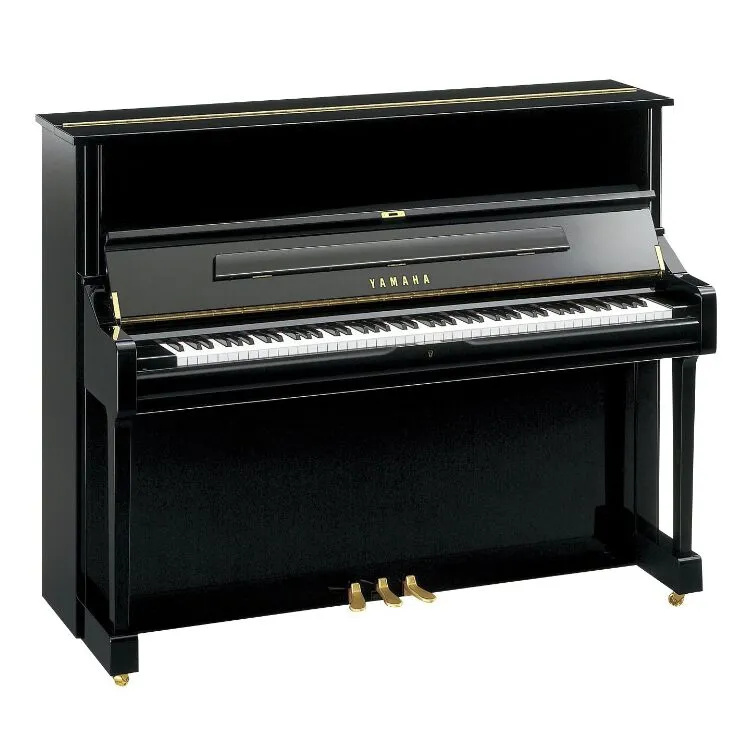
An upright piano is an acoustic piano built vertically, with the strings and soundboard standing upright inside a tall cabinet rather than lying flat. That vertical design is the whole point: it lets a full acoustic instrument with 88 keys sit flush against a wall and use a fraction of the floor space a grand piano needs. If you are shopping for Yamaha upright pianos for a home, a studio, or a classroom, the upright is almost always the starting point.
Because the strings run vertically, an upright piano produces its sound from a compact footprint while still delivering the touch and tone of a true acoustic instrument. Among acoustic pianos, the upright is the most popular by far. It is extremely popular with beginners, professional musicians, and music schools alike, and it outsells every other instrument type in the acoustic piano world.
This guide explains how an upright works, how it differs from a grand piano, the main types of upright by size, and where the Yamaha models fit. For players weighing an acoustic against a digital piano or a Silent piano, we cover those options too.
Ever since the piano was invented, pressing a key has done one thing: it sends a felt hammer up to strike a set of tuned strings, which vibrate against a large wooden soundboard that amplifies the note. What sets the upright apart is orientation. The strings, hammers, and soundboard are arranged vertically, so the mechanism rises up the back of the cabinet instead of extending backward along the floor.
That vertical layout drives one real difference in feel. In a grand, gravity returns each hammer to rest, which allows very fast repeated notes. An upright uses a spring-assisted action to reset the hammers, so the touch is slightly less responsive on rapid repetition. For the overwhelming majority of players, across classical, pop, and jazz, that difference never becomes a limitation.
The soundboard is the heart of the tone. Yamaha builds its U Series soundboards from solid spruce, a wood prized for the way it produces a clear, resonant sound. Longer strings and a larger soundboard move more air, which is why a taller upright generally plays louder, with a richer bass, than a short one.
The core difference between an upright and a grand comes down to how the instrument is oriented and how much space it needs. A grand piano lays its strings and soundboard horizontally and projects sound upward, which gives a baby grand or full grand its wide dynamic range and effortless projection. An upright stands vertically and is heard from a cabinet against the wall, trading a little projection for a far smaller footprint.
Both instruments share the same 88 keys and, in a quality build, the same premium materials. An upright piano is generally less expensive than a comparable grand and asks far less of your floor space, which is why it is the practical choice for most homes and studios. Players who want the full breakdown can read our guide to upright vs grand pianos.
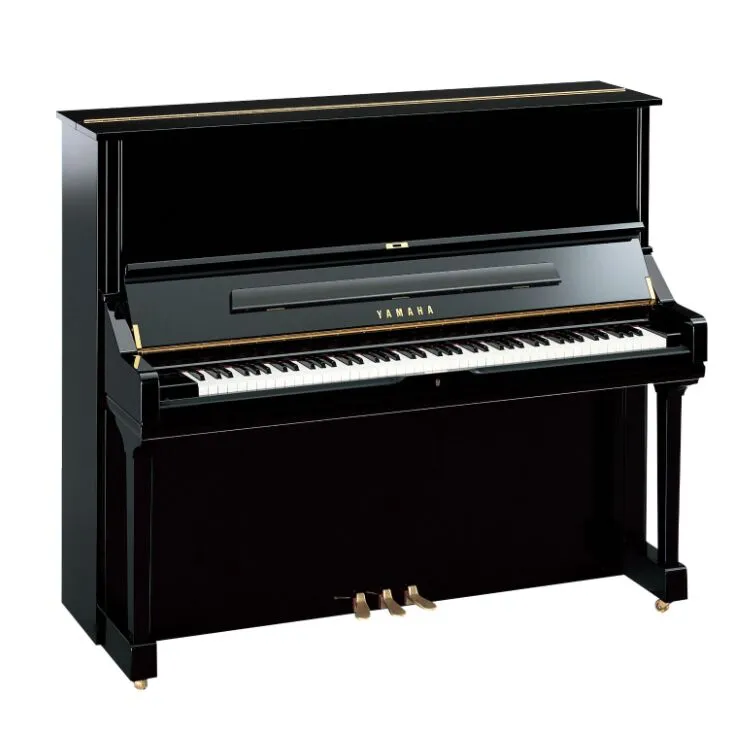
Upright pianos, sometimes called vertical pianos, are grouped by height, and height tracks closely with sound. The taller the cabinet, the longer the strings and the larger the soundboard, so the models at the top of the range produce more tone and power.
The recognized categories are:
Yamaha’s current range runs from around 43 inches at the entry level up to 52 inches, so there is a size for virtually any room and any player.
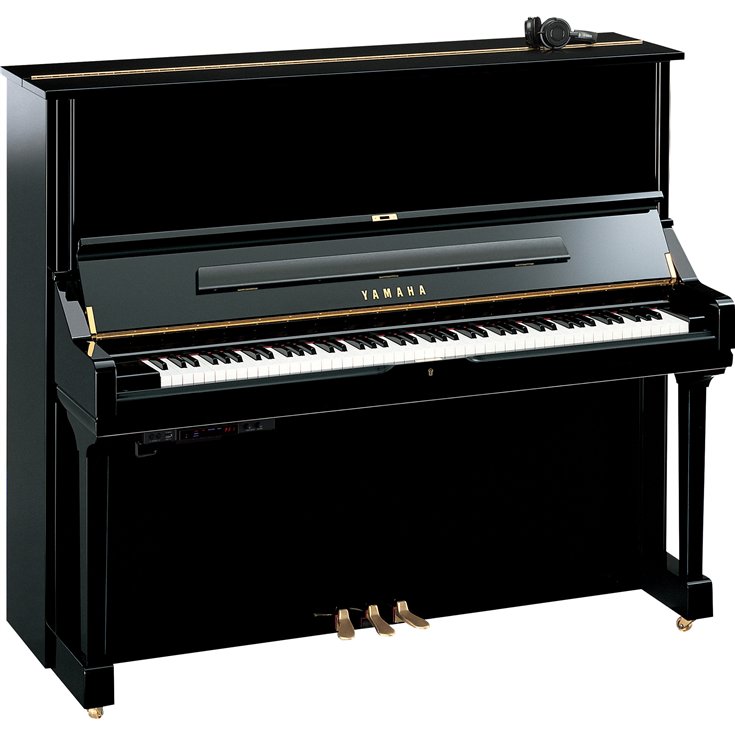
Yamaha builds its uprights in several series, each aimed at a different player. Together they cover the beginner, the committed student, and the professional.
The Yamaha b Series is the entry-level line, starting with the compact b1 at 43 inches. It pairs a century of Yamaha craftsmanship with an affordable price, which makes it a great option for a first acoustic piano at home. The Yamaha P Series, built as a studio upright, is the workhorse favored by schools and houses of worship for its durable construction and dependable touch.
The Yamaha U Series is the reason the brand is so extremely popular with professional musicians. The U Series has been the world’s most popular upright for more than half a century, and its two models set the standard other upright pianos are measured against. The Yamaha U1, for example, stands 48 inches (121 cm) tall: a compact professional upright that fits a living room or studio while delivering outstanding tone and Yamaha’s precise, responsive touch, in finishes from polished ebony to satin walnut. The Yamaha U3 rises to 52 inches (131 cm), and its larger soundboard and longer strings give it a louder, deeper bass, making it the taller sibling for players who want to fill a bigger space. Both are made in Japan with solid spruce soundboards, Yamaha’s V-Pro frame, and specially designed hammers built for a lifetime of playing.
Above the U Series sits the Yamaha YUS Series, which draws its scale design and components from Yamaha’s CF concert grand line for an exceptional tone reminiscent of a grand, well beyond what most players expect from an upright.
Yamaha also offers factory-installed technology on many U and YUS uprights, a perfect blend of a genuine acoustic piano and modern digital control:
For most players, the upright is the right instrument type. It puts real acoustic strings, a wooden soundboard, and 88 weighted keys under your fingers, in a cabinet that respects the floor space of a normal room. Beginners get a forgiving, rewarding instrument to learn on, and advanced players get tone and touch that hold up to serious repertoire, whatever the style.
If you have the room and want maximum projection, a baby grand is worth considering, and if quiet practice or recording matters most, a Silent upright or a digital piano may suit you better. Yamaha is the only new piano we sell, though our pre-owned inventory also includes trusted names such as Steinway, Kawai, and Boston for buyers shopping the used market. A well-chosen upright is a piano you grow into rather than out of, and a genuine pleasure to play every day.
Once your piano is home, keep it sounding its best: see what piano tuning costs and what it takes to move a piano safely.
An upright piano is an acoustic piano with its strings and soundboard mounted vertically inside a tall cabinet. It has the same 88 keys as a grand piano but uses much less floor space, which makes it the standard acoustic piano for homes, studios, and music schools.
Vertical pianos typically range from about 36 inches for a spinet up to 52 inches for a professional upright. Yamaha’s current line runs from the 43-inch b1 to the 52-inch U3, YUS3, and YUS5.
An upright piano has 88 keys, the same as a grand piano. The keyboard is identical; only the orientation of the strings and soundboard differs.
A grand piano is horizontal and projects sound upward with a wide dynamic range, while an upright is vertical and is heard from a cabinet against the wall. The upright uses a spring-assisted action rather than the gravity-based action of a grand, it costs less, and it takes up far less space.
Yes. An upright is one of the best instruments a beginner can learn on. An entry-level model such as the Yamaha b1 delivers a genuine acoustic touch and tone at an accessible price, and a taller studio or U Series upright will serve a player well into advanced study.
Most upright pianos have three pedals: a sustain (damper) pedal, a soft pedal, and a middle practice or mute pedal that lowers the volume for quiet playing.